

What is webasto and what is it for? Webasto is a colloquial term popular in Poland…

Braking distance – what is it and what does it depend on?
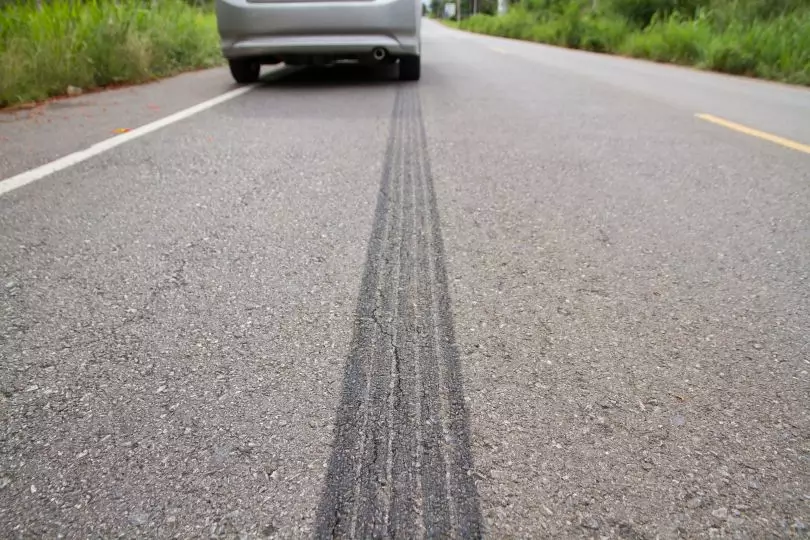

Braking is one of the most important elements of road safety. Every driver should be aware of how long the braking distance of his vehicle can be and what factors influence its length. However, we often forget that braking distance is not only about reaction time and the effectiveness of our brakes. Many other factors, such as speed, road surface condition, weather conditions and the condition of our car, affect it. In this article, we will take a closer look at what braking distance is, how it is calculated and what it depends on. This knowledge can help you better understand how to stay safe on the road and avoid potential accidents.
Braking distance – what is it?
Braking distance is the distance the vehicle covers from the moment it notices an obstacle or a situation requiring immediate stopping until the vehicle comes to a complete stop. This path is the sum of two components - the reaction path and the stopping path.
Reaction path is the distance the vehicle covers when the driver notices danger and decides to brake. Human reaction time averages about 1 second, but may be longer when tired, stressed, or under the influence of alcohol.
Stopping distance is the distance a vehicle travels from the moment the driver presses the brake pedal to the moment it comes to a complete stop. This distance depends on many factors, such as vehicle speed, brake condition, vehicle weight, road surface condition, weather conditions and tire type.
All these factors can significantly extend braking distances, which in turn increases the risk of a collision. That's why it's so important to always keep a safe distance from other vehicles and adjust your speed to the prevailing road conditions.
Factors influencing braking distance?

Braking distance depends on many factors that may influence on its length to varying degrees. Here are the most important ones:
Speed.
The higher the speed, the longer the braking distance. Increasing your speed by 10 km/h can significantly extend your braking distance, especially at higher speeds.
Surface condition.
The road surface has a large impact on braking distances. Wet, slippery, ice or snow-covered surfaces can significantly extend braking distances.
Atmospheric conditions.
Rain, snow, fog or strong wind can affect braking distances both directly (by reducing grip) and indirectly (by increasing the driver's reaction time).
Vehicle condition.
The technical condition of the vehicle - especially brakes and tires - is crucial to the length of the braking distance.
Vehicle weight.
The heavier the vehicle, the longer it takes to stop. Therefore, trucks usually have longer braking distances than passenger cars.
Driver reaction time.
The time that elapses from the moment you notice the danger to the moment you press the brake pedal affects the braking distance. This time may be longer if you are tired, stressed or under the influence of alcohol.
Understanding these factors is crucial to safe driving.
Winter braking – what do you need to know?
Driver reaction time – how to improve?
Driver reaction time is one of the key factors influencing braking distance. Here are some ways that can help you reduce this time and improve road safety:
Avoid distractions.
The best way to improve your reaction time is to avoid distractions while driving. This means that we should avoid using the phone, eating, drinking, turning on the radio or navigation while driving.
Regular rest.
Fatigue can significantly slow down your reaction time. Therefore, it is important to take regular breaks during long journeys and to ensure that you get enough sleep before driving.
Avoid alcohol and drugs.
Even small amounts of alcohol or certain medications can affect our ability to react quickly. Therefore, we should always avoid driving after drinking alcohol or taking medications that affect our coordination and reaction time.
Regular exercise.
Regular exercise can improve our overall physical fitness and ability to react quickly. It doesn't have to be intense training - even regular walks can have a positive impact.
Defensive driving.
Defensive driving involves anticipating potential hazards on the road and responding to them in advance. This, in turn, can shorten our reaction time and increase road safety.
Let us remember that road safety depends on us. The faster we are able to react to potential threats, the greater our chances of avoiding a collision.
How does the ABS system in a car work?
How to calculate braking distance?

Braking distance is the distance the vehicle travels from the moment you press the brake pedal to a complete stop. It is one of the key factors influencing road safety. Here's how you can calculate it:
Understanding the components of braking distance:
As mentioned earlier in the article, the braking distance consists of two main elements:
Reaction route: This is the distance the vehicle covers from the moment it notices an obstacle to the moment it presses the brake pedal. It can be calculated by multiplying the reaction time (usually approximately 1 second) by the vehicle's speed.
Stopping distance: This is the distance the vehicle travels from the moment you press the brake pedal to stopping. It depends on many factors, such as vehicle speed, road surface condition, tire and brake condition.
Calculating the braking distance:
Braking distance (D) may be calculated using the following pattern:
D = V * T + V^2 / (2 * g * f)
Where:
V is the vehicle speed (in m/s),
T is the reaction time (in s),
g is the acceleration due to gravity (approx. 9.81 m/s^2),
f is the coefficient of friction between the tires and the road surface (depending on the condition of the road surface and tires).
However, remember that these calculations are only approximations and are actual braking distance may be longer depending on road conditions and vehicle condition.
How to test your car's braking distance yourself?
Braking distance testing your car, it is extremely important to make sure that the braking system is working properly and is able to stop the vehicle at a safe distance. Here are the steps you can take to test your car's braking distance:
Find a safe place.
To test stopping distances, you need an open and flat surface that is free from traffic. A parking lot or closed race track may be good places to do this.
Check the condition of the vehicle.
Make sure your tires are properly inflated and your brakes are working properly. If you have any doubts about the condition of your vehicle, please consult a professional mechanic.
Prepare for the test.
Prepare to ride at approximately 30 km/h (or whatever speed you want to test). Remember to wear your seat belts.
Run the test.
Once you reach the desired speed, press the brake pedal as hard as you can safely. Notice where the car stopped.
Calculate braking distance.
You can now measure the distance from the point where you started braking to the point where the car stopped. This distance is your stopping distance.
Remember that this test only gives an approximate result of your car's braking distance. In real road conditions, braking distances may be longer due to factors such as weather conditions, road surface condition or vehicle load. Therefore, always exercise caution and maintain a safe distance from other vehicles on the road.