
Active foam – what is it and how does it work? Washing your car is an activity that is important…

Bicycle rack for a car – how to choose the best one?

A bicycle rack for a car that will ensure trouble-free transport of your bicycle – what to choose?

A bike rack is a convenient way to transport two wheels that does not limit the space in the car. What should you pay attention to when choosing a bike hanger? How to choose a holder for the type of vehicle and are there any special regulations regarding bicycle racks?
What types of bike racks are available?
Carrying a bicycle inside a car can be a backbreaking task. First of all, a two-wheeler takes up a lot of space. To fit it into the car, you may need to remove the front wheel.
Another thing is that not every car will fit a bicycle. If we manage to squeeze it in, we will lose luggage space. You will also need to find a way to properly attach such a vehicle to ensure safe transport.
Therefore, a convenient solution is to use a bicycle rack. There are three solutions to choose from, differing in terms of design and installation location:
- roof bike rack,
- hitch bike rack,
- flap bike rack.
How to choose the right bike holder for your car?
The choice of a bicycle rack should depend on the type of our car. The handle must also be adjusted to meet the conditions set out in Art. 61 of the Road Traffic Law, which states that:
- a load protruding beyond the side planes of the vehicle outline may only be placed in such a way that the total width of the vehicle with the load does not exceed 2,55 m,
- the load cannot protrude from the front of the vehicle to a distance of more than 0,5 m from the front contour plane and more than 1,5 m from the driver's seat,
- the height of the vehicle with load cannot exceed 4 m.
The above regulations apply to the transport of items larger than bicycles, but just in case, it is worth checking whether two-wheelers mounted on a small car will not protrude too much, and the total height of an SUV or van with bicycles on the roof will not exceed the permissible level.
Above all, a bicycle rack should be comfortable to use. It will be relatively easy to install a roof rack on a station wagon with rails. It will be difficult to do this on a car with a rounded roof, a city car or even a convertible. In their case, a handle attached to the back will work better.
In such a case, we can choose a bicycle rack with a hook. If we don't have a towbar and don't want to install it, a bike rack with a flap will be the solution.

Roof bike rack
Roof bike rack – advantages and disadvantages
A bike rack on the roof will be a good solution if the car has railings and you already have crossbars. This type of transport protection is relatively easy to install. Moreover, the roof bike rack bars do not take up much space, so storing them will not be a problem.
Since the bikes will be placed high, they will not get excessively dirty while riding. They will not be splashed with mud from under the wheels and will not be very exposed to stone impacts. The disadvantage of a roof bike rack is that the bike has to be lifted high.
In addition, driving with a high load increases aerodynamic drag, which increases fuel consumption. We will not allow you to enter some underground parking lots with bicycles on the roof. You will also have to pay attention to whether you will fit in when passing under a low viaduct or going through a tunnel.

Bicycle rack with hook
Bicycle rack with a hook – advantages and disadvantages
A bike rack with a hook is a convenient solution. Two-wheelers do not need to be lifted high to attach them to the handles or remove them. Although the bikes will protrude beyond the outline of the car, they will not cause as much aerodynamic drag as when using a rooftop bike rack. In many models, it is possible to tilt the trunk so that the rear hatch of the car can be opened.
The disadvantages include, first of all, the need to have a hook. Bikes transported in such a rack may also get dirty because they will be placed close to the road and rear wheels. It is also important to remember that the rear of the vehicle will be significantly loaded. A hitch bike rack will make cornering difficult.

Tailgate bike rack
Tailgate bike rack – advantages and disadvantages
A bike rack for a tailgate does not require a hook. Thanks to it, you don't have to struggle with lifting bikes to the roof. Such a trunk can be used in both three- and five-door cars, as well as sedans.
This type of rack may limit visibility through the rear window. We may also lose the ability to open the trunk, although this depends on the design advancement of the handle. You should also remember that the bicycle rack with a flap should not cover the board and lamps. Such holders do not have their own lighting and space for a license plate, like bicycle holders with a towbar.
When riding on very bumpy surfaces, there is a risk that the bikes will scratch the bodywork, although manufacturers use covers to theoretically prevent this. The trunk will also weigh down the hatch.
How should a bicycle be secured when transporting it in a suitable carrier?
The bicycle connected to the locks prepared by the rack manufacturer should be stable. However, it is worth ensuring additional security. Why?
Let's start with the general issue of using a bike rack. Pursuant to Art. 60 section 1 of the Road Traffic Law, it is prohibited to use the vehicle in a way that threatens the safety of a person inside or outside the vehicle.
How does this relate to transporting bicycles? This provision may be interpreted to mean that bicycles should be attached to the bicycle rack as solidly as possible and should not move or be able to detach and fall from the rack.
This is specified in Art. 61 of the Code, which states that a load placed on a vehicle should be secured against changing its position or causing excessive noise, and devices used to secure the load should be protected against loosening, hanging freely or falling while driving.
Two-wheelers transported in a bicycle rack protrude beyond the outline of the vehicle. During maneuvers, they will be affected by forces that may cause them to move. Additional fastening can protect us against an unpleasant surprise in the event of sudden braking, emergency avoidance of an obstacle or gusty wind. Even when the original bike rack mount fails, the bonus mount can prevent your bike from falling off.
In a situation where we carry several bicycles, we can use accessories for securing luggage. This type of security is used, among others, for immobilizing loads on trailers. The nets are often flexible and can be used to cover several bicycles at the same time.
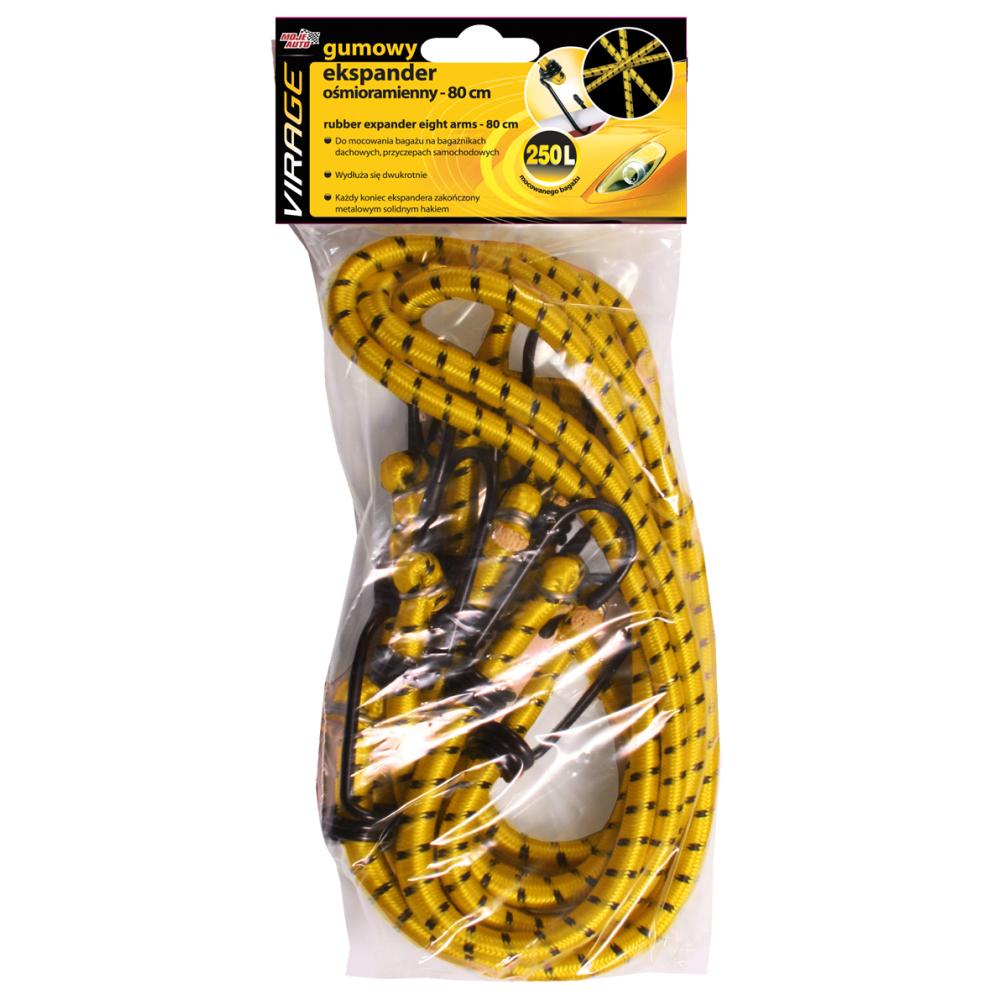
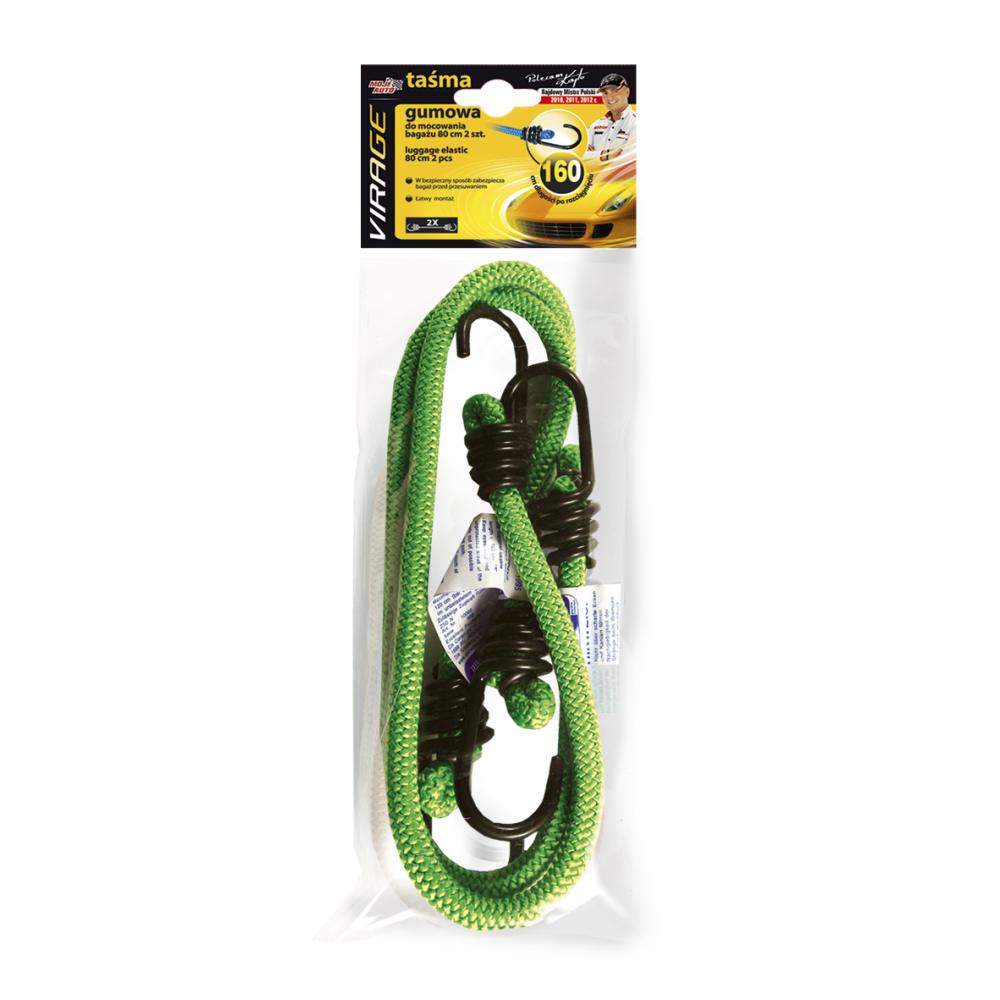
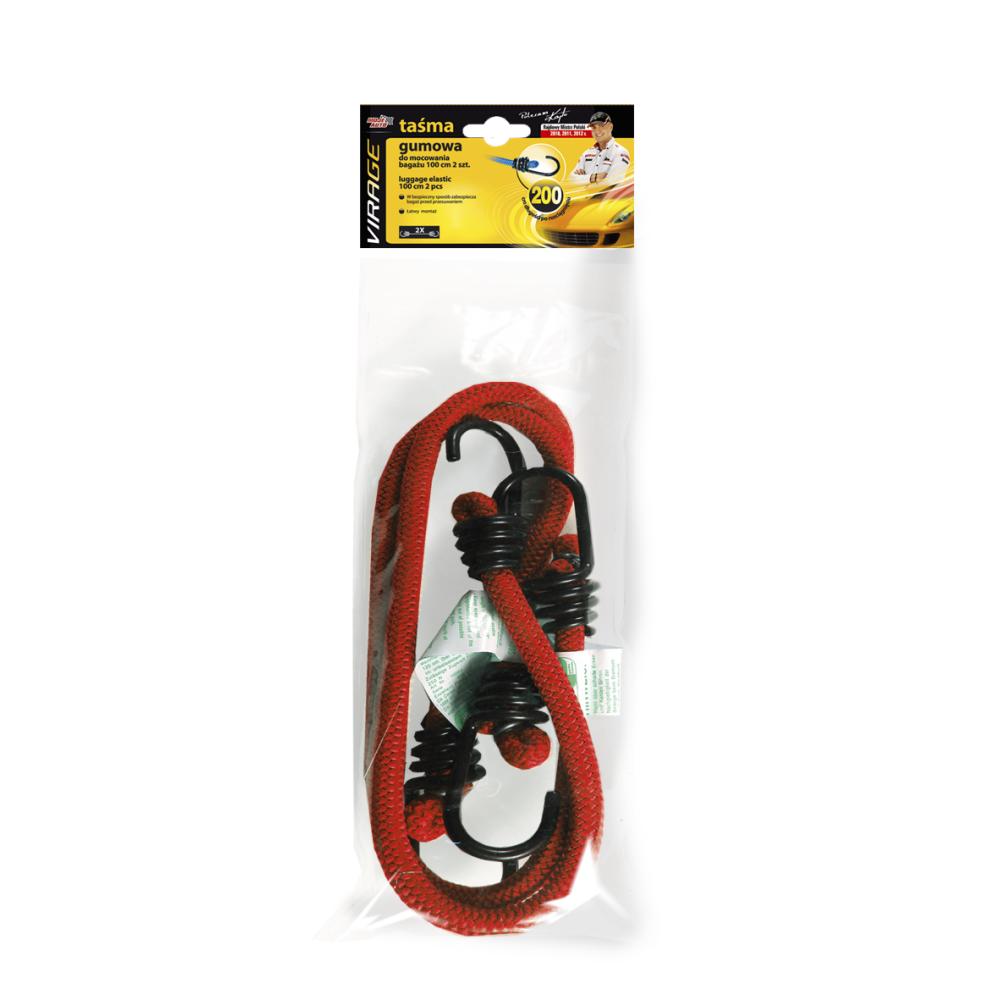
Additionally you can use rubber tape for securing luggage. The cables can be placed around the frame or rims of the bicycle, and their ends can be attached to the bicycle rack.
Transporting a bicycle in a holder and Polish law
If we want to use a bicycle rack, we should take into account road traffic regulations. This especially applies to situations in which we use a hook holder.
The regulation on the technical conditions of vehicles and the scope of their necessary equipment states that in the case where a loaded or unladen luggage rack is mounted on the ball of the coupling device or integrated with the vehicle body, in a way that violates Art. 60 section 1 point 2 of the Act, the trunk should be equipped with:
1) lights referred to in § 12 section 1 points 3-5, 7, 8, 12-14, meeting the requirements specified in Annex 6 to the Regulation;
2) place intended for placing the registration plate, meeting the requirements specified in Annex 5 to the Regulation.
The mentioned article 60 section 1 point 2 of the Road Traffic Act prohibits covering lights and signaling devices, license plates or other required boards or signs that should be visible.
Let's put this into simpler language. If using a bicycle rack with a hook means that the rear lights and rear license plate are not visible in our car, then such a rack should be equipped with:
- direction indicators and lights: "stop" brake lights, illuminating the rear license plate, rear position lights, rear reflectors other than triangular lights, emergency lights, rear fog lights and reversing lights,
- space for a license plate.
Three issues are important here. First of all, in order for a bicycle rack to have working reversing lights, it should have a 13-pin electrical harness. The 7-pin standard does not provide such an option and it is better to avoid holder models with such a connector. Simply put, such a bicycle rack will not comply with the regulations.
The second issue concerns the license plate. In the past, the problem was that you couldn't legally attach the rear panel from a car to a bicycle rack. Tricks were used in the form of making a replica, which was illegal under the law. The officers could simply consider it a fake.
Since 2016, you can obtain an additional, third plate, especially for a bicycle holder. It is entered in the ID card as trunk registration.
The last thing is related to the hook. If I don't have it in my car, we can install it. However, it must be legalized at a vehicle inspection station and its installation must be reported to the Transport Department. We write more about this issue in the text Towbar installation – can you do it yourself?.
Let's remember that you need to take care of your bike just like you would a car. We write more about the operation and regulations regarding two-wheelers in the article Switching from four to two wheels.


