Dreams about four wheels come true Just three decades ago in Poland it was much easier...

By car to go skiing
Trip to the mountains by car

The beginning of the winter break at school is for many of us an excuse to go skiing. Today, apart from the Polish mountains, popular destinations for motorists are tourist centers in the Czech Republic, Austria, Germany, France and Italy. Regardless of the chosen location, the invariable basis for a successful holiday is the proper preparation of the car for the journey.
We change the environmental conditions
We drive short distances every day. And let's be honest, it is not a serious challenge for us drivers or for the car. On the contrary, we fall into a routine. We believe that after changing the tires and windshield washer fluid our car is already prepared for winter. We learn on a frosty morning how deceptive this belief is. Problems with opening a frozen lock or door handle, a discharged battery or generally starting the engine - these are just a few examples.
First of all, let's take into account that the weather conditions in the areas where we go skiing are different than where we live. We may also be surprised by the road conditions. The seemingly black asphalt may be covered with a thin layer of ice, the likelihood of heavy snowfall increases, and local fog will occur in mountainous sections. In each of these situations, as drivers, we must react appropriately. It will be more difficult to do this without preparing the car for departure.

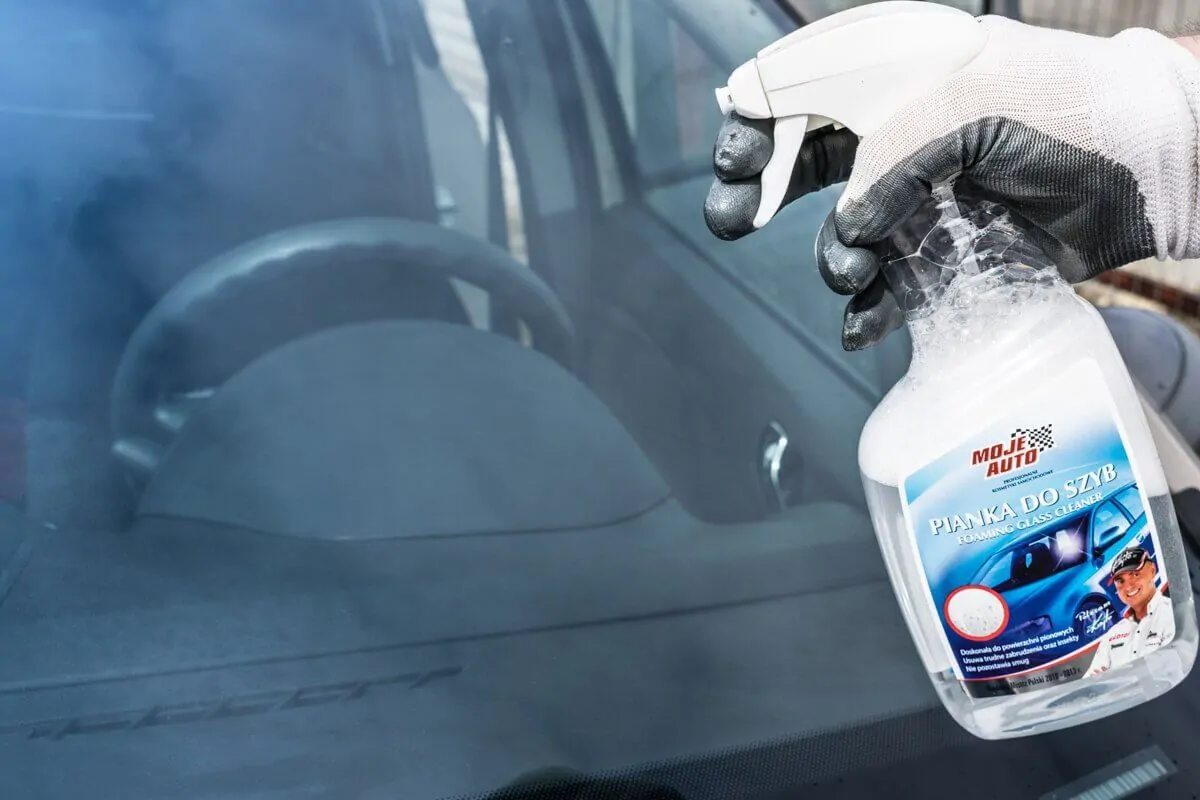
Winter windshield washer fluid (photo: Moje Auto)
Pre-departure checklist
The tires have been changed, but who among us regularly measures the height? tread? After all, according to Polish regulations, the minimum thickness is 1,6 mm and you can see that they are still good. Yes, but in the case of winter tires, manufacturers (experts) recommend 4 mm. Plus tire pressure. This is where the knowledge from physics lessons comes in: as the ambient temperature decreases, the pressure decreases. So, before going to the mountains, I will inflate the tires by about 0,2-0,3 bar above the value given in the car's owner's manual. I check the pressure again after reaching the destination and top it up if necessary. Naturally, after returning home, the "excess" air created should be reduced.
In second place are the fluids in the braking system (in the mountains we press the brake pedal more often and harder) and the cooling system (this is one of the causes of problems with starting the engine in winter). A simple check comes down to reading the level on the expansion tank scale. But it might be worth asking yourself when they were last replaced? Additionally, check the engine oil level and top up the windshield washer fluid. Good visibility is the basis of road safety. Wipers work in conjunction with winter windshield washer fluid. The cost of replacing feathers is small compared to the effect, which - literally - will be visible.
At this point there is one more element left - light. It's hard to imagine driving a car without working bulbs. As a side note, in a vehicle loaded with luggage and with traditional headlights, the height of the light beam falling on the road must be corrected. The last thing is the battery. Symptoms of battery exhaustion develop gradually, but if we ignore them, the first morning in the mountains will bring disappointment instead of going to the slopes. If everything is OK, I will still check its fastening, clean the terminals and protect them with a thin layer of grease.

Skis? Larger excess baggage is not a problem
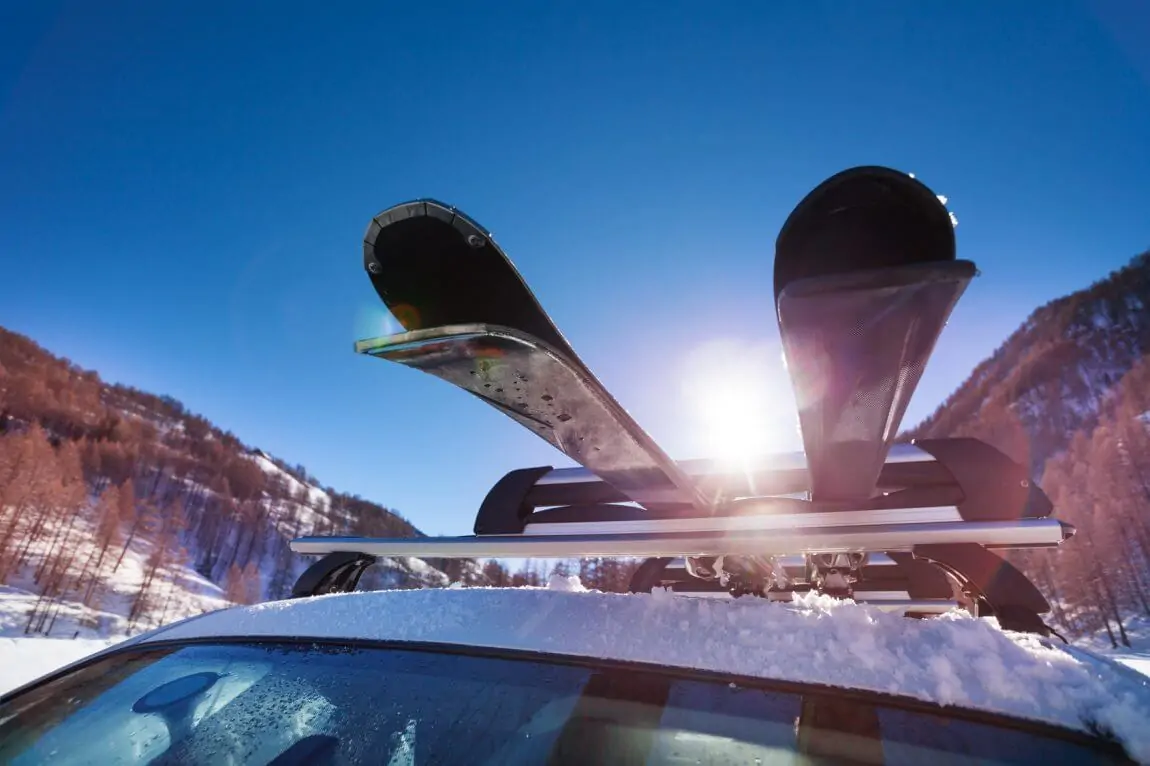
It's much easier to pack for a holiday. In winter, there are warm jackets, overalls, shoes and poles, as well as skis and snowboards. These usually travel on a roof rack. At the same time, we use closed boxes, which is a practical solution considering the excess of the above-mentioned wardrobe. Provided that we do not overload with excess kilograms. Each car and rack components manufacturer specifies the maximum roof load and - what we forget - the maximum driving speed with such a set.
In the trunk of my car there will be plenty of room for snow chains (note, on some sections of mountain roads their use is obligatory), a shovel (preventive drivers add a sandbag), jumper cables for the battery, a flashlight (the so-called headlamp), waterproof gloves and thick rope for towing. Additionally, a set of defrosters for windows and locks, a brush on a long stick, scrapers (because this one can always break), windshield washer fluid and a one-liter bottle for refilling the radiator, a reflective vest for each person traveling and a set of spare bulbs and fuses. And what is always in it - a fire extinguisher, a warning triangle, a first aid kit, wheel wrenches and a jack. Everything is arranged in one box, because there is nothing more frustrating than looking for something you need on a frosty night on a dark road.

(photo: My Car)