Car rims can contain operational contaminants and contaminants that are much more difficult to remove...

Brake caliper – everything you need to know
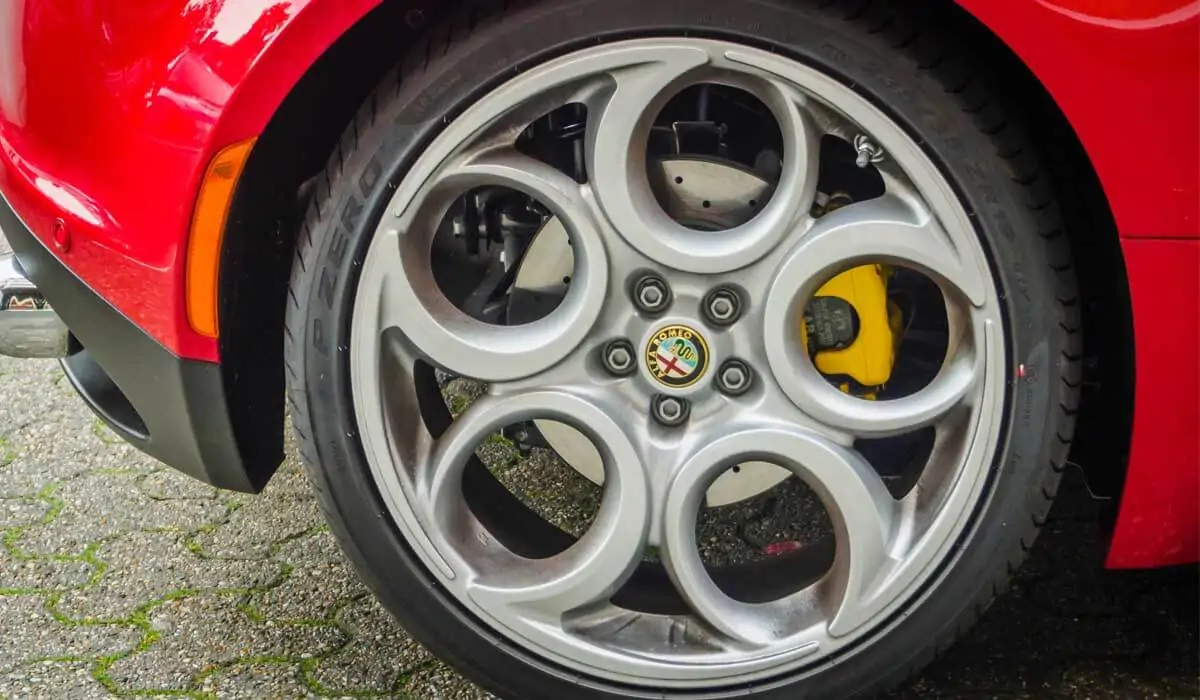

Is painting brake calipers unnecessary? What are the effects of such tuning? First of all, we do this to improve the overall appearance of the car. However, not everyone is aware that painting brake calipers also promotes brake regeneration. This means that it is not a procedure that affects the aesthetics of the vehicle, but also the efficiency of its operation. How to do it yourself?
From the article you will learn:
- how a brake caliper works,
- what types of brake calipers are there,
- what harms brake calipers,
- how to regenerate brake calipers,
- what varnish is best for painting brake calipers,
- Is it better to dismantle the brake calipers or paint them,
- how to cover their surface with varnish,
- what to consider when choosing a color.
How does a brake caliper work?
The brake caliper is one of the key elements of the disc braking system. The easiest way to present its principle of operation is to describe the functioning of the entire set.
The brake disc is permanently attached to the hub and rotates with the wheel. The brake caliper is in turn attached to the wheel stub. The caliper contains brake pads, which are a friction element.
To put it simply, the brake caliper is responsible for pressing the pads to the disc. When we press the brake pedal, the master cylinder generates pressure to activate the piston in the caliper, which moves the pads. When the disc and pads come into contact, friction is created and the car starts to brake.
What types of brake calipers are there?
We can distinguish two types of brake calipers: floating and fixed. How do they differ from each other?
In a floating caliper, also known as a sliding caliper, one internal brake pad is first pressed against the disc during braking. The caliper housing then moves and presses against the outer pad. A single piston is most often used in a floating caliper.
The fixed (rigid) brake caliper does not change its position during operation. The pistons are placed on both sides of the disc. The outer and outer pads are pressed against the disc at the same time.
Brakes with fixed calipers usually provide more effective braking compared to a system with floating calipers. This solution is often used in sports cars or more expensive SUVs. Fixed calipers allow you to dose the braking force more precisely.
Floating clamps are more susceptible to vibration and may be less resistant to high temperatures and harsh treatment. On the other hand, they are less expensive to produce compared to fixed clamps. They are most often made of cast iron. More expensive materials are used to produce floating calipers, e.g. nitrided titanium and aluminum alloys.
Floating clamps are easier to use and repair compared to fixed clamps. Operating a braking system with sliding calipers is also cheaper.
What harms brake calipers?
Due to the fact that brake calipers are components that have a significant impact on driving safety, we should pay close attention to their condition. What influences the operation of clamps?
Their location makes them exposed to moisture. Dirt, including mud or road salt, may also settle on them. Regular cleaning can delay the process of rusting the calipers or aging the piston covers.
Lack of proper servicing can be one of the main causes of caliper failure. Let's remember to replace them regularly brake fluid. It is hygroscopic, meaning it absorbs water. Over time, it loses its anti-corrosion properties, which may contribute to, for example, rusting of the pistons in the calipers.
The condition of brake discs and pads is also important. If they are too worn or deformed, the caliper piston may extend too far, which can cause the caliper to become deformed over time.
The clamps are also not favored by too intensive use. Aggressive driving style may overheat brake system. Let's avoid too frequent sudden braking and zero-speed driving, and when driving downhill, let's not keep our foot on the brake pedal all the time. It is better to brake faster and harder several times instead of causing the pads to rub against the discs for a longer period of time.
How to regenerate brake calipers?
There is no need to immediately replace rusty or worn brake calipers. We can regenerate them. It may also be necessary to renew the calipers before painting them. Varnishing is one of the elements of the renovation process.
How to regenerate brake calipers? The first thing you should do after disassembling them is to thoroughly clean them of rust. We can use a wire brush for this purpose. Remains of dirt or scratches can be polished with fine-grained sandpaper. We can get rid of all deposits, dirt particles and rust using compressed air.
We verify the condition of all clamp components. It is best to replace worn pistons. We proceed similarly in the case of guides, air vents and sealants. It will be most convenient to simply buy a repair kit that includes the previously mentioned parts.
The next stage, which we discuss in more detail below, is painting the calipers. Only then do we assemble the individual clamp elements.
Install the brake caliper next to the wheel and tighten it according to the recommended torque. Then we bleed the brake system and check its operation. Which varnish should you choose for painting brake calipers? The quality of the paint used to paint the brake calipers largely determines the effect. The key feature is high resistance to the adverse effects of weather conditions.
As we mentioned, you need to be aware that brake calipers are located in one of the most sensitive places in the vehicle, which are particularly exposed to salt, mud and dirt. The varnish must also protect the calipers against corrosion, thanks to which we will not only enjoy a satisfactory effect for longer, but also protect these elements against premature wear and aging.
If you decide to paint your brake calipers, when choosing a good paint, pay attention to the other tools you will need. This includes a brush, roller, hardener and sandpaper. Special agents will also be useful for cleaning the surfaces from rust, which may have accumulated, especially in older models. Brake calipers are an increasingly visible element of the vehicle. Previously hidden behind silver aluminum rims, today they are presented through transparent rims. It is worth taking advantage of this by discreetly making the appearance of your car more attractive.

brake caliper during disassembly
How to prepare and protect brake calipers?
Brake calipers can be painted in several ways, so choose the school that suits you best. The first one involves painting the dismantled calipers, so you'll need to remove them first. This requires more work, but you can also clean them thoroughly of dirt, dust and rust. We recommend additionally degreasing and sanding their surface, and matting the top layer. Thanks to this, the paint will adhere better to the brake calipers, which will translate into a longer life of the coating.
However, not everyone decides to dismantle the clamps. In such a case, all adjacent elements that will not be painted should be carefully protected. These include discs, brake lines and suspension components. With both methods, the condition of the brake drums should also be checked. It may turn out that they need to be replaced with new ones, it is worth doing this while painting the calipers.
How to paint brake calipers?
Precision is important because only then will we achieve the desired effect and the brake calipers will look attractive in the new version. Apply the varnish to the entire element, reaching all the nooks and crannies. The most effective method is to apply several thin layers at large intervals.
After applying each next one, let the varnish dry and then apply the next one. If we apply one thick layer, it will be much less durable and resistant to external factors. If it does not dry well, you will quickly notice unsightly chipping of the paint on the surface of the calipers.

Painted brake calipers
What color should you paint your brake calipers?
Painted brake calipers affect the overall image of the car, so choosing the right color cannot be accidental. We always match it to the color of the rims and car body. We have an unlimited selection of shades, so you can experiment. Silver, blue and white clamps match the black color.
If you want to make your car stand out even more, you can choose, for example, bright orange. Silver goes perfectly with copper and gold. What if you have a car in a more intense color? In such a case, drivers often choose more subdued colors, e.g. black, graphite, shades of gray and navy blue. Don't be afraid to experiment, but remember that too intense a color is not always a good idea.
Summary
- The varnish used for painting brake calipers should be resistant to external factors and protect their surface against corrosion.
- By dismantling the calipers before painting, we can better clean them of dirt and cover them with paint more thoroughly.
- Painting mounted calipers requires protection of adjacent elements to avoid unnecessary dirt.
- Apply thin layers of paint at intervals of several hours.
- Choose the paint color taking into account the shade of the car and rims.